An independent reading guide for everyday outfit planning and fit checks. Not the official site.
Independent wardrobe notes
A HipoBuy guide to everyday outfits.
This site gives you independent styling and information-checking advice you can use in any
wardrobe: how to plan everyday outfits, how to compare garment measurements, and what listing
photos can and cannot tell you.
Category buttons open hipobuyfind.com in this same tab. This site does not sell goods, does not
handle orders, and does not verify product quality or current stock.
Category links open on hipobuyfind.com. Check each destination listing for current details.
3 archive notes
10 categories
No account needed
Reviewed
01
Plan the outfit before browsing
Everyday wardrobe planning gets easier when you decide on the shape of an outfit first and
shop second. A HipoBuy session where you already know you need a light outer layer and a
straight leg is calmer than scrolling with no plan. Below are three starting points you can
copy into a note on your phone. They are styling suggestions, not a claim that any specific
item is available on HipobuyFind.
Mild day
Light T-shirt + lightweight jacket + straight-leg trousers + plain sneakers.
Keep the tee in a light neutral, let the jacket carry a slightly deeper tone, and finish
with trousers in the same family. One mid-tone sneaker keeps the bottom half grounded.
Summer basics
T-shirt + shorts + a plain cap.
For summer basics, the cap is the only strong shape, so keep the tee and shorts close in
value. A cap finishes the silhouette and shades the face; borrow the cap colour from the
shoe rather than adding a third accent.
Cold layers
Base layer + hoodie or sweater + outer jacket.
A winter clothing layering checklist starts with the middle layer, because that is
where you decide how warm the day actually feels; the outer jacket only adds wind and
rain cover. If all three layers are thick, size the outer piece with room to move, and
check that the jacket sleeve still covers the hoodie cuff.
Colour, proportion and the space between layers
A neutral colour outfit works on a simple rule: two tones plus one repeat. Pick a light
neutral for the top, a mid neutral for the bottom, and then repeat one of those tones in the
shoes or cap. That repeat is what makes a plain outfit read as intentional instead of
accidental.
Proportion is about where the top ends. With a straight-leg trouser, a hem that sits near the
hip keeps the leg long; with a wider trouser, a slightly cropped top helps. For sleeve length,
compare the sleeve you already like on your favourite jacket against the new one rather than
trusting a size label. The same applies to layering space: a lightweight jacket layering guide
only helps if you know how thick your middle layer is, so measure the jacket you already wear
over a sweater.
Headwear and simple accessories change the read of an outfit more than their size suggests.
A plain cap makes a T-shirt and shorts look sporty; a beanie or a bucket style makes the same
outfit softer. A necklace or a plain bracelet is usually enough. Choose one, keep the metal
tone consistent across accessories, and skip pieces that clash with a collar. Accessories
outfit planning is mostly about removing a second competing focus.
Why a two-piece outfit still needs two measurements
A set can look like one decision, but two piece outfit planning is still two garment
decisions. A matching set is usually cut from the same fabric and the same fit block, and
that is exactly why it is easier to get one half right and the other half wrong: the top may
be sized for a relaxed shoulder and the bottom for a high waist. Compare the top shoulder
and sleeve against a top you already own, then compare the waist and inseam against a
trouser you already own — as two separate checks, even when the set shares one size label.
Style illustration; not a product listing. A rail of plain pieces makes it easier to see
whether a top and trouser are close in value before you browse.
02
Compare measurements, not just size labels
Size labels are not a shared standard. A medium from one maker can sit next to a large from
another, and a jersey cut can deliberately run looser than a T-shirt in the same size. The
reliable habit is to compare numbers against a garment you already wear, using the same
measuring method the seller describes. For outerwear, read the shoulder first: a jacket
shoulder measurement guide matters more than the letter on the tag, because the shoulder
seam decides where the sleeve begins and no other number can correct it.
Measurements worth comparing, by garment type
Item
Measurements to compare
Common mistake
Jacket
Shoulder width across the back seam to seam, plus sleeve length from shoulder seam to
cuff.
Looking only at the chest size and skipping the shoulder, which decides whether the
jacket sits on your frame.
Jersey
Flat chest width, measured across the front from armpit to armpit on a garment lying
flat.
Treating a flat chest width as if it were the body chest circumference.
T-shirt
Flat chest width, body length from the highest shoulder point to hem.
Comparing length from the collar instead of from the shoulder point.
Hoodie / sweater
Flat chest width and sleeve length, measured on the item laid flat without stretching
the rib.
Measuring a stretched ribbed cuff and assuming the same sleeve length in wear.
Trousers
Waist measured flat across the top band, plus inseam from crotch seam to hem.
Doubling a flat waist without checking whether the band is elasticated.
Shorts
Flat waist and outseam (top of the band to hem).
Borrowing the inseam number from long trousers, which measures a different line.
Flat chest width and chest circumference are not the same number
A flat chest width is a single front layer measured armpit to armpit while the garment lies
flat. Chest circumference is the full distance around a body. They are related only if the
measuring method is the same, so always confirm how the seller took the number before you
compare it with anything. A jersey chest measurement guide is only useful once that method
is stated; without it, a number cannot be compared with your own garment.
Worked example — not a product measurement
52 cm flat chest width × 2 ≈ 104 cm chest circumference
If a listing gives a 52 cm flat chest width, using the same flat measuring method, you can
roughly relate it to about a 104 cm chest circumference. This is arithmetic to help you
read a listing; it is not a measurement of any item and it is not a fit guarantee. Fabric
stretch, seam allowance and cut change the result in wear.
Build a comparison habit, not a size chart
Take a jacket, a jersey and a trouser you already wear comfortably and measure each one
flat. Keep the numbers in a note, together with the unit.
Confirm whether the seller uses centimetres or inches before comparing, and note that a
value written as 52 is ambiguous on its own.
Ask about measurement tolerance. Knitwear, washed cotton and lined jackets all behave
differently, and it is reasonable to ask the seller how closely a listed number matches
the physical garment.
Avoid inventing a universal size chart from a handful of listings. Garment measurement
tolerance questions are normal and worth asking before you decide, and sleeve length
comparison is far more useful when both sleeves are measured the same way.
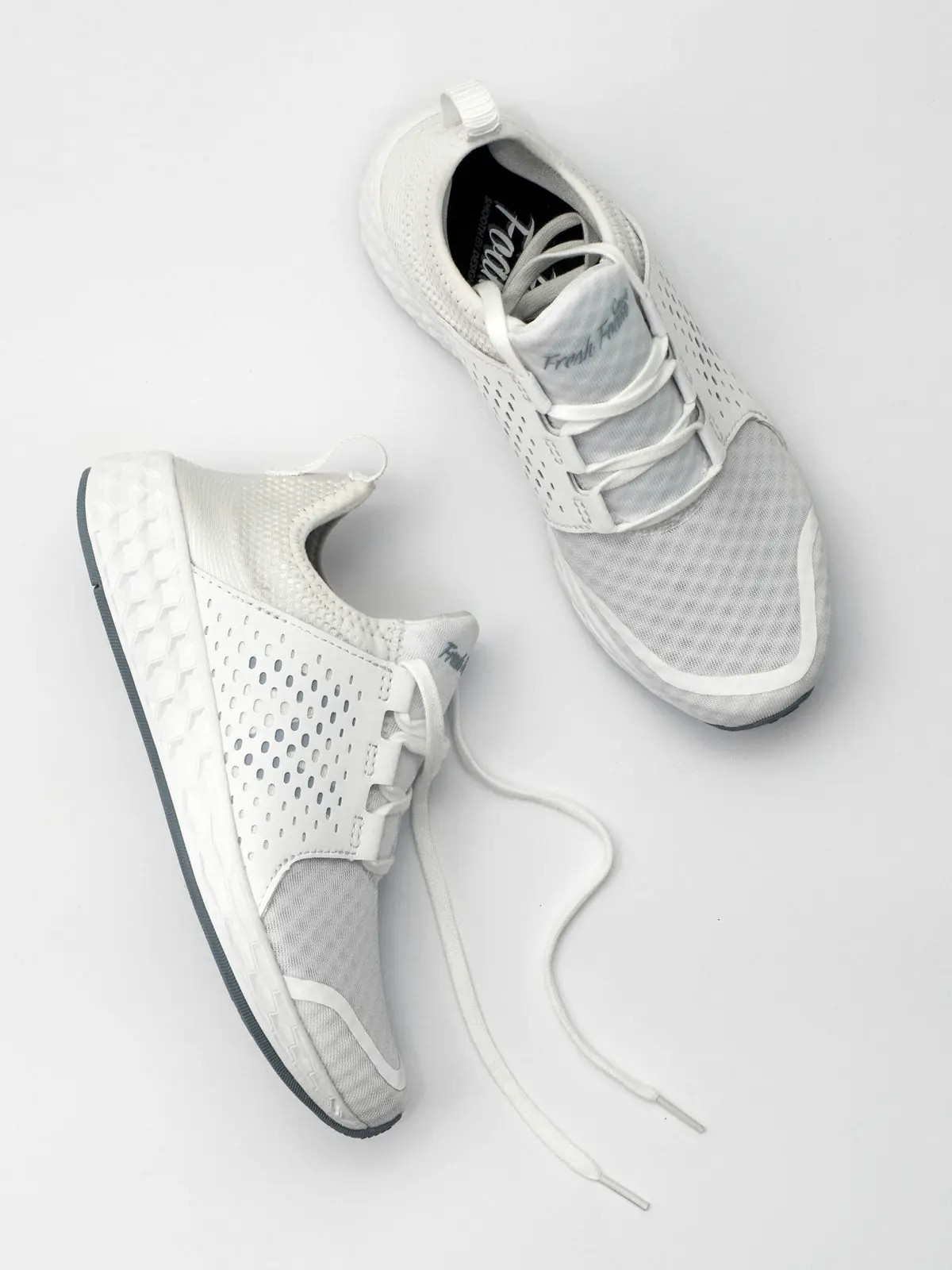
Style illustration; not a product listing. The upper, stitching and sole are the parts a
close photo can show — the parts it cannot show are discussed in note 03.
03
Read what photos and materials can tell you
A sneaker listing photo checklist is useful because shoes show construction in a way clothing
often hides. In a close photo of an unbranded sneaker you can usually see the shape of the
upper, how panels meet, whether the stitching line is continuous, the texture of the
material surface, and the profile of the sole. Those are appearance details. They tell you
what the shoe looks like, not how long it will last.
What photos cannot prove: durability, fibre composition, comfort, or authenticity. A clean
product shot says nothing about how a sole ages, and a crisp stitching line says nothing
about how the seam holds after a season. A sneaker material details guide based on images
alone is a reading exercise, not a test result.
Material and care checklist
Checks to run on any listing
Check
What to look for
When to ask the seller
Fibre source
A stated composition, for example the percentage of cotton, polyester or wool.
When the description names a look ("linen feel") but no percentage.
Care label
A photo or text of the wash and dry instructions, including the water temperature
symbol.
When no care label appears anywhere in the listing images.
Description match
Whether the written description agrees with what the photo shows, such as colour,
closure type or sleeve length.
When a text claim and a photo disagree; ask which one is current.
Lettered brand labels
Any visible lettering on labels, prints or hardware, so you know what you are reading
about.
When the label text is not legible in the photo and it matters to you.
Material claims verification questions are worth writing down in advance: what is the
composition, how is the fabric finished, what does the care label say, and does the seller
know whether the description is the current one. Asking is not a sign of doubt; it is how
you keep an everyday layering checklist honest.
An order information checklist
If you do buy something elsewhere, keep a short record of the basics in one place. This site
does not process payments or orders, so it cannot look anything up for you. Note the order
number exactly as issued, the name of the service provider or seller you bought from, where
the tracking number came from, and the last time that information updated. Re-check with the
provider or seller before drawing conclusions, because this guide does not list tracking
tools, delivery speeds, shipping fees or return policies.
Style illustration; not a product listing. A plain hat next to simple jewellery is a quick
test of whether two accessories compete or agree.
04
Choose a category, then check the details
The table groups categories by the job they do in a wardrobe: clothing, footwear, headwear
and small accessories. Each category appears once. Use the "what to compare" column as a
short reminder before you open a listing.
Category links open on hipobuyfind.com. Check each destination listing for current details.
Category directory
Wardrobe role
Category
What to compare
Browse
Footwear
Shoes
Upper shape, sole profile and stitching shown in photos; size against your own pair.
Where do this HipoBuy guide category links lead? Each link in the table goes to the matching
category on hipobuyfind.com, and nothing else. If a destination has changed what it shows,
the destination is still the place to check the current details.
05
Questions about this guide
Is hipobuyreps.autos an official HipoBuy website?
No. This is an independent information guide and it has no official association with
HipoBuy, HipobuyFind or any product brand.
The guide collects styling notes, measurement advice and photo-reading habits so you can
plan a wardrobe and read a listing more carefully. It is not an official channel, and it
does not speak for any of those brands.
Does this website sell products or handle orders?
No. This site does not sell goods, does not process payments or orders, and does not
verify quality or current stock.
Clicking a category takes you to hipobuyfind.com in the same tab. Anything you decide
there — listings, availability, payment, shipping, returns — is handled by that
destination or the seller, not by this guide. The general measurement, photo and styling
advice here is not a test result or an endorsement of any particular item.
How should I compare jacket and jersey measurements?
Compare each garment against one you already wear, using the same method the seller used.
For a jacket, start with shoulder width and sleeve length, then check room for a middle
layer. For a jersey, start with flat chest width and confirm whether that number is
measured armpit to armpit on a garment lying flat. A flat chest width of 52 cm can
roughly relate to a 104 cm chest circumference only when both use the same flat method;
that is a worked example, not a product measurement or a fit promise. Keep the unit
consistent and ask about tolerance.
Can listing photos verify fabric or product quality?
Not on their own. Photos show appearance; they cannot confirm durability, fibre
composition, comfort or authenticity.
What they are good for is visible detail: the shape of a sneaker upper, whether stitching
runs continuously, the profile of a sole, the texture of a surface. For anything about
the material itself, look for a stated composition and a care label photo, and ask the
seller when the description and the images disagree.
What information should I keep for order tracking?
Keep four things together: the order number, the name of the service provider or seller,
where the tracking number came from, and the last time the status updated.
That record makes it easier to ask a clear question later. This guide does not list
tracking tools, delivery speeds, shipping costs or return policies, so order and
after-sales questions should be checked with the provider or seller you used.
Where do this guide's category links lead?
Each category link goes to its matching category on hipobuyfind.com, and the main and
footer buttons go to the root of hipobuyfind.com.
No link points anywhere else: there is no internal navigation, no anchor link and no
search box on this page. Category links open on hipobuyfind.com, so check each
destination listing for current details.